A Significant Crack in the NFA: Suppressors Move Closer to Ordinary Firearm Status
A federal court has delivered a monumental shift in how suppressors, short-barreled rifles, and short-barreled shotguns are treated under federal law. For the first time since the National Firearms Act of 1934, a district court has ruled that the registration and approval requirements for these items no longer rest on a solid constitutional foundation after Congress eliminated the associated tax. The Justice Department declined to block the ruling from taking effect, and practical changes are already underway.
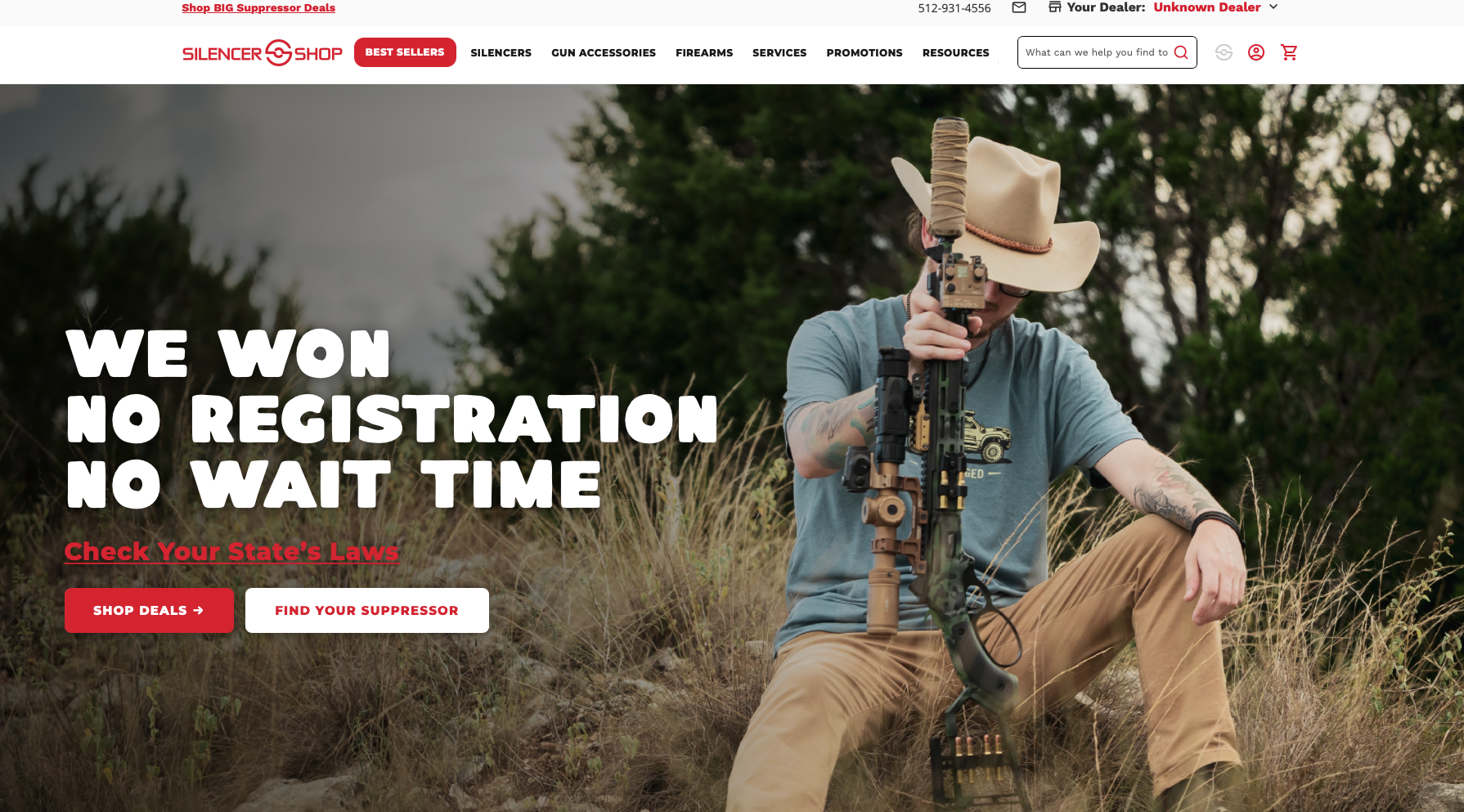
Silencer shop is wasting no time, beating around the bush and as of August 13, 2026, they are actively pushing orders out and selling suppressors without the convoluted NFA process.
Background
The NFA was enacted as a tax measure. It imposed a $200 making and transfer tax on certain firearms and accessories and constructed a registration system around collecting that tax. In 2025, the One Big Beautiful Bill Act reduced the making and transfer taxes on suppressors, short-barreled rifles (SBRs), short-barreled shotguns (SBSs), and “any other weapons” (AOWs) to zero, effective January 1, 2026. Machineguns and destructive devices retained the $200 tax.
Once the tax reached zero, plaintiffs argued that the remaining registration scheme could no longer be justified under Congress’s taxing power. On August 5, 2026, U.S. District Judge James Wesley Hendrix of the Northern District of Texas agreed in the consolidated cases of Silencer Shop Foundation v. ATF and Jensen v. ATF. He held that the challenged registration, application, and related provisions exceeded Congress’s enumerated powers for these now-untaxed items. The court issued a permanent injunction against enforcement of those provisions as to the covered parties. A short stay expired without further government action, and the injunction took effect early on August 13, 2026.
Who Brought the Case
The lead plaintiffs in Silencer Shop Foundation v. ATF included:
Silencer Shop Foundation
Gun Owners of America, Inc.
Gun Owners Foundation
Firearms Regulatory Accountability Coalition, Inc. (FRAC)
B&T USA, LLC
Palmetto State Armory, LLC
SilencerCo Weapons Research, LLC
Individual plaintiff Brady Wetz
Fifteen states: Texas, Alaska, Georgia, Idaho, Indiana, Kansas, Louisiana, Montana, North Dakota, Oklahoma, South Carolina, South Dakota, Utah, West Virginia, and Wyoming
The consolidated Jensen v. ATF plaintiffs added John Jensen, Jeremy Neusch, David Lynn Smith, Hot Shots Custom, LLC, the Texas State Rifle Association, FPC Action Foundation, and the Citizens Committee for the Right to Keep and Bear Arms.
The injunction protects these plaintiffs, their members, agencies, political subdivisions, and current and future customers in covered transactions. It is party-specific rather than a universal nationwide order.
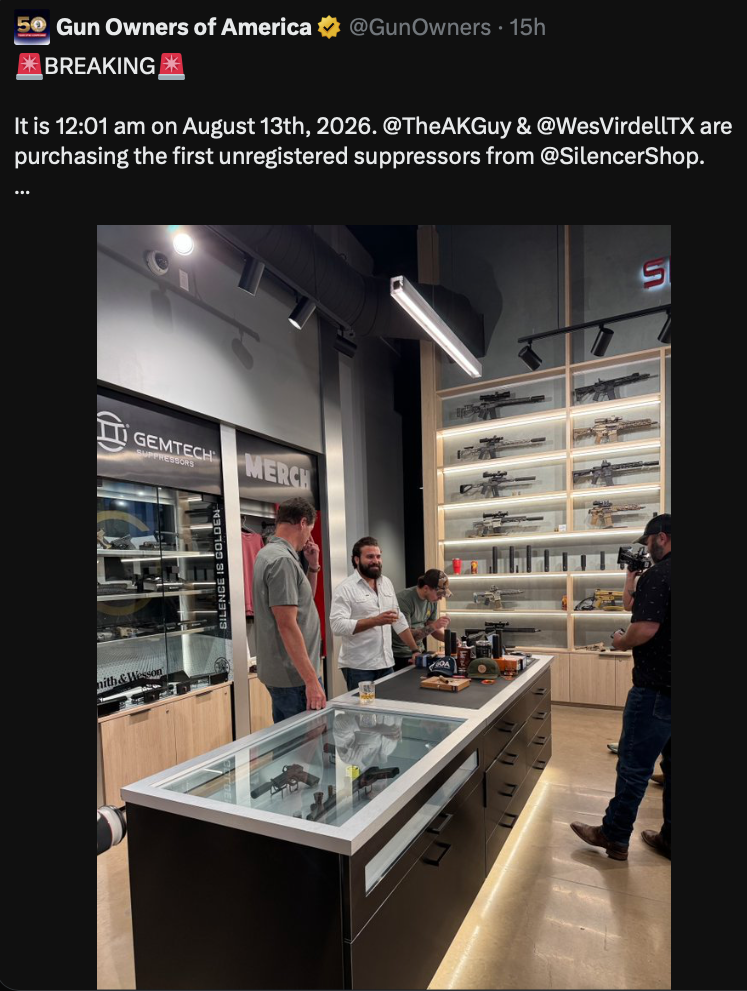
Image, courtesy, gun owners of America: The fist non NFA transfer
What Silencer Shop Is Doing
Silencer Shop, closely tied to the lead plaintiff Foundation, moved quickly once the injunction took effect. At 12:01 a.m. Central time on August 13, the company completed the first lawful commercial suppressor transfers without Form 4 registration or federal registry entry since 1934. Working with Gun Owners of America, Silencer Shop transferred suppressors to GOA members at its Leander, Texas location after formally notifying the ATF and Department of Justice of its intent.
Silencer Shop has stated that suppressors and AOWs obtained through the company or Powered By Silencer Shop dealers, in the 27 states without additional state-level registration requirements, can now transfer under standard Gun Control Act procedures including a Form 4473 and NICS check but without the old NFA paperwork. In states that still impose their own registration-style requirements, the company continues to manage the process for customers.
Scope and Realistic Outlook
The ruling does not repeal the National Firearms Act. Machineguns and destructive devices remain fully regulated. State laws continue to apply, and some states maintain independent restrictions. Coverage depends on connection to the plaintiffs or covered commercial transactions. The government retains the ability to appeal.
Even with those limits, the practical effect is significant. As an FFL and 07/02 manufacturer of NFA items, I view this development with measured optimism. Once a critical mass of lawful transfers occurs outside the old registration system, reversing course becomes more difficult, politically and operationally. The genie is out of the bottle in a meaningful way. Suppressors function as hearing protection and practical tools. Removing unnecessary federal friction for covered parties is a step that aligns more closely with how these items are actually used.
There will be further litigation, questions about the precise reach of the injunction, and continued work in states with their own rules. Still, the direction of travel has shifted. The foundation of the 1934 registration scheme for these particular items has been substantially weakened, and industry participants, including Silencer Shop, are already operating under the new reality. That is a development worth watching closely as it unfolds.